Simple press‑fit inserted PTFE sleeves rely purely on mechanical clearance instead of molecular bonding. Repeated swings between process heat‑up and system cool‑down create differential thermal expansion between steel valve body and fluoropolymer liner. Gradual separation builds hidden gaps behind the lining; corrosive media penetrates these voids and attacks the metallic substrate from behind, even though the exposed PTFE surface looks intact. GCFld executes controlled grit‑blast substrate preparation followed by high‑temperature sinter fusion rather than loose insertion. Each production lot undergoes peel‑strength sampling to validate bonding performance, lowering the risk of in‑service liner lifting for batch‑processing chemical loops with frequent temperature transients.
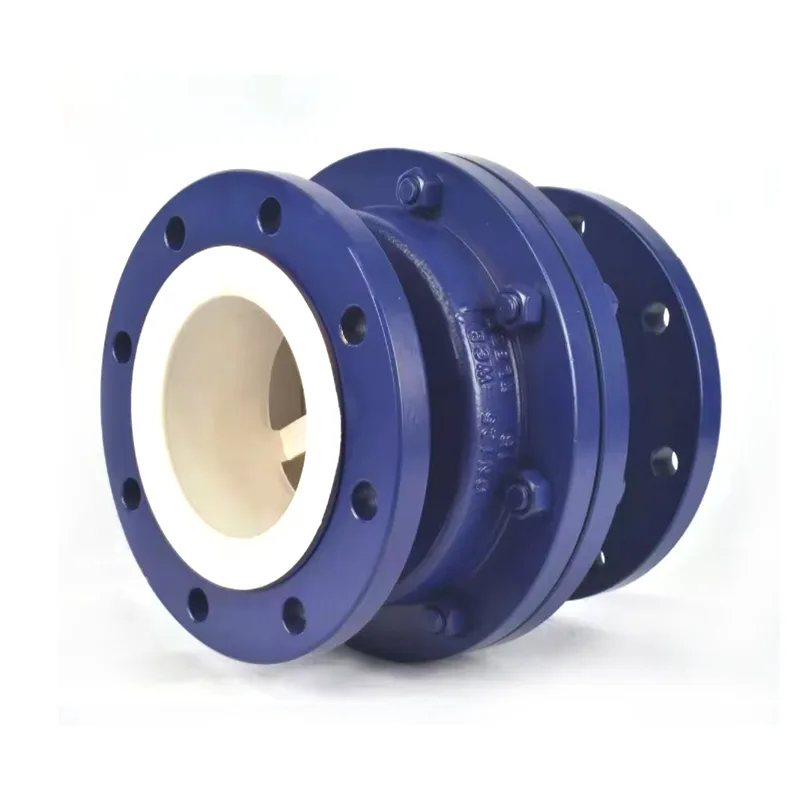
Many generic lined check‑valve suppliers deliver fixed‑spring disc assemblies with spring tension set for general‑purpose service, without tuning to actual pipeline flow‑rate and shut‑off conditions. Rapid pump shutdown events generate water‑hammer pressure surges inside chemical piping. Untuned springs cause valve‑disc chattering, repetitive high‑impact slamming against PTFE‑coated seats. Micro‑cracks propagate across lining sealing zones over thousands of operating cycles, slowly raising reverse‑flow leakage rates. GCFld adjusts disc‑spring pre‑load parameters against client‑provided flow‑profile data. Simulated surge‑cycle lab testing validates closure behaviour before shipment, reducing progressive seat‑lining damage in high‑transient chemical‑transfer pipelines.
Recycled or blended PTFE material can satisfy visual inspection and basic chemical‑resistance appearance, yet contains uncontrolled trace‑metal contaminants. For pharmaceutical intermediate and fine‑chemical production lines, ion leaching from impure liner stock contaminates high‑value process batches. This failure mode cannot be detected through visual valve inspection and only surfaces once finished product assay results drift out‑of‑spec. GCFld restricts incoming PTFE to virgin‑resin batches with complete material traceability, rejecting mixed‑recycled feedstock. Material‑composition records are retained per lot, supporting end‑user batch‑traceability requirements for high‑purity chemical‑synthesis workflows.
European chemical‑plant EPC tender specifications demand valve‑level test documentation aligned with EN 12266‑1 industrial‑valve testing standard. Generic third‑party sample certificates taken from early prototype runs are not acceptable for serial production batches. Suppliers that only supply one‑off prototype reports hold up site acceptance and delay plant commissioning milestones. Every GCFld production batch generates project‑referenced English‑language test dossiers covering hydrostatic shell‑strength, seat‑leakage rate and lining‑adhesion sampling results. These documents integrate directly into EPC contractor technical submission packages, removing bottlenecks for site‑acceptance‑inspection procedures.
Procurement documents frequently define valve main‑body specifications while leaving flange‑joint auxiliary components unspecified. Mismatched dissimilar‑metal bolt and gasket combinations create galvanic cells under chemical‑vapour exposure. Corrosion products spread onto liner edges, initiating local‑point liner chipping at flange boundaries. GCFld reviews process‑media properties during RFQ phase and proposes matched fastener‑gasket material sets. Component‑pairing recommendations appear within technical data packs, helping EPC teams avoid flange‑joint‑originated liner damage during long‑term plant‑operation cycles.
PTFE lining is chemically robust yet susceptible to gouging damage during on‑site installation. Many valve manufacturers only deliver hardware with minimal generic manuals. Improper flange‑bolt torque, mis‑aligned piping and careless tool contact scratch or nick internal PTFE surfaces. Subsurface scratches become starting‑points for chemical permeation and local degradation. GCFld includes project‑tailored installation guidance covering torque‑value ranges, alignment precautions and liner‑protection tips within each shipment. Clear operational guidance cuts human‑caused liner‑damage incidents during plant‑erection and commissioning phases.